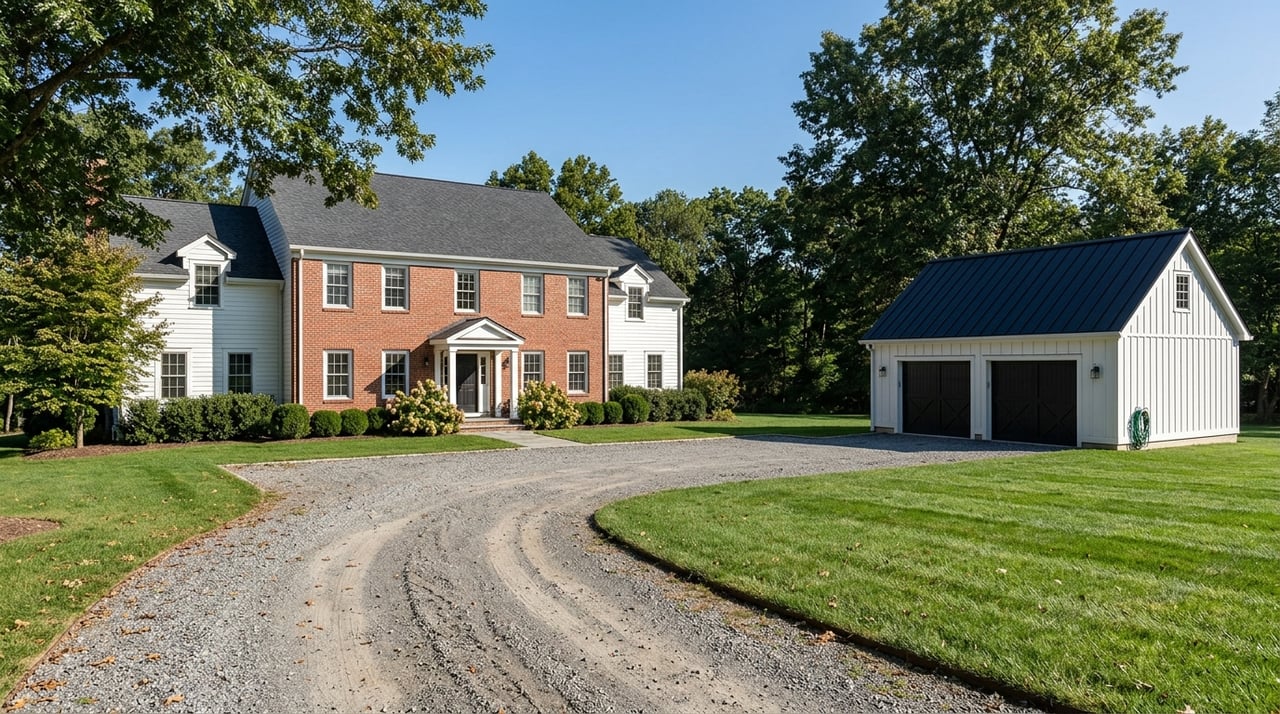
Dreaming of a home with room to spread out near Warwick, NY? You are not alone. Buyers looking for acreage often want more privacy, more flexibility, and a property that feels different from a standard neighborhood lot. The key is knowing that "more land" does not always mean "more usable land." In this guide, you’ll learn what the local market looks like, what Warwick land rules can mean for you, and what questions to ask before you make an offer. Let’s dive in.
Warwick Acreage Market Snapshot
If you are shopping for a home with land near Warwick, you are looking in one of the larger town settings in Orange County. The Town of Warwick covers about 116 square miles and sits roughly 50 miles northwest of New York City near the New Jersey border.
As of May 2026, market snapshots show 87 homes for sale, a median listing price of $645,000, a median sold price of $540,000, and a median of 37 days on market. The current 10990 search page shows 100 matching properties, which gives you a useful sense of active inventory in the area.
What "Home With Land" Means in 10990
In Warwick, acreage listings can vary a lot. You may see homes on less than a quarter acre, while other properties stretch to nearly 18 acres. That means your search should focus on how you plan to use the land, not just the acreage number.
Current examples in 10990 include properties around 0.24 acre at $405,000, 2 acres at $725,000, 3 acres at $694,500, 4.7 acres at prices in the mid-$600,000s to mid-$700,000s, 5 acres at $999,000, and larger properties from roughly 8.9 to 17.9 acres at a wide range of price points. Land-only options also appear, including a 3.5-acre lot and a 23.3-acre parcel.
That spread tells you something important. Price is shaped by more than lot size. Access, utility setup, improvements, and the condition of the site all affect value.
Why Land Size Is Only Part of Value
Two acreage properties can have very different day-to-day usability. One may include a private road, drilled well, and septic system, while another may stand out for features like a large garage or other improvements.
When you compare homes with land, think beyond the headline acreage. A parcel may look impressive on paper, but the real value often depends on where the house sits, how the land lays out, and what it takes to maintain or improve it.
Features That Can Change Value
- Private road access
- Well and septic systems
- Garage or outbuilding space
- Steep slopes or wet areas
- Open clearings versus wooded sections
- Raw land versus improved homesite
Warwick Zoning Matters
If you plan to buy a home with land near Warwick, zoning should be on your radar early. Warwick has several zoning districts, including Agricultural Industry, Rural, Mountain, Conservation, and different suburban residential categories.
Those district labels are not just technical details. They help shape what can happen on a property now and later. For example, the town states that the Mountain District is intended to protect scenic beauty and fragile soils, while the low-density suburban district is intended to maintain existing suburban-density residential development.
Usable Acreage Is Not Always Total Acreage
This is one of the biggest issues buyers overlook. In Warwick, some land may be legally or practically difficult to build on, clear, or subdivide.
The town identifies primary conservation areas that include wetlands, ponds with buffers, streams, the 100-year floodplain, and slopes of 25% or more. It also excludes features like roads, easements, water bodies, floodplains, wetlands, and steep slopes from certain yield calculations.
Warwick also identifies secondary conservation areas such as stone walls, hedgerows, meadows, historic rural corridors, scenic viewsheds, and trails. So if you are buying for future projects, you need to understand not just how much land exists, but how much land is truly workable for your goals.
What to Check on a Larger Parcel
- Wetlands on or near the site
- Floodplain areas
- Steep slopes
- Easements
- Existing trails or stone walls
- Scenic or conservation constraints
- Clear buildable area around the home
Thinking About Future Improvements
Many buyers want acreage because they picture future flexibility. Maybe you are thinking about a barn, detached garage, pool, or home addition. That is exactly why local rules matter before you buy.
Warwick regulates residential accessory structures closely. On residential lots, an accessory building or garage is capped at 1,200 square feet and 48 feet in greatest dimension, must be at least 5 feet from lot lines and 10 feet from the main building, and is also subject to yard coverage limits.
That means a property with "plenty of land" may still have practical limits on what fits comfortably. If future improvements matter to you, this should be part of your showing and offer strategy from day one.
Private Roads and Common Driveways
Access can be a major factor with homes on larger lots. Some acreage properties use private roads or common driveways, and those setups deserve a close look.
Warwick allows common driveways in conservation-density subdivisions, but the rules are specific. The code requires emergency and maintenance access, limits one-entrance common driveways to six lots and two-entrance driveways to 12 lots, requires a 50-foot right-of-way with a 16-foot wearing surface, caps the common portion at 2,000 feet, and requires an HOA or recorded maintenance agreement.
For you as a buyer, the real question is simple: who is responsible for upkeep, and what does that cost or require over time? A long driveway can affect convenience, maintenance, and winter planning.
Well and Septic Questions to Ask Early
Homes with land often come with private utility systems. In Warwick, it is smart to ask right away whether a property uses a private well, septic system, or both.
According to the Orange County Water Authority, New York State Health Department guidance recommends annual bacteria testing for private wells and testing for other contaminants every 3 to 5 years. The same source notes EPA guidance that septic systems should generally be inspected every 1 to 3 years and pumped every 3 to 5 years.
These are not small details. Testing and maintenance history can help you understand current condition, future upkeep, and whether a property has been cared for consistently.
Ask These Showing Questions
- When was the well last tested?
- Were other contaminants tested in the last 3 to 5 years?
- When was the septic last inspected?
- When was the septic last pumped?
- Are records available for both systems?
- Has any PFAS testing been completed?
PFAS Testing Is Worth Asking About
Orange County is currently participating in New York State’s private-well PFAS testing and mitigation rebate pilot. If you are buying a home with a private well, ask whether PFAS testing has already been done and whether those records can be shared.
This is a practical question, not an alarmist one. It is simply part of doing careful homework when a property relies on a private water source.
Land Disturbance Can Trigger More Review
If your plans include clearing, grading, excavation, or larger site work, Warwick’s local code is important. The town regulates tree and topsoil removal, grading, excavation, mining, and exploratory or production drilling under its tree, topsoil, and grading rules.
Site review materials can require topography, wetlands, slope data, drainage patterns, and nearby water features. In plain English, if you are buying land for change or expansion later, you want to know how much review that work could involve.
A Smart Buying Strategy Near Warwick
Buying a home with land is usually less about speed and more about clarity. The right property is not always the biggest one. It is the one that matches how you actually want to live and what the parcel can realistically support.
A smart strategy is to narrow your must-haves early. Decide how much usable outdoor space you need, whether private systems are acceptable, whether a private or common driveway works for you, and whether future additions matter.
Then, compare each property through that lens. A well-located 2-acre property with a workable layout may fit your goals better than a larger parcel with steep slopes, wetlands, or access complications.
Why Local Guidance Helps
Acreage purchases come with more moving parts than a typical in-town home search. You are not just evaluating bedrooms and finishes. You are also looking at access, zoning context, utility systems, maintenance, and future use potential.
That is where local market knowledge makes a difference. When you understand how Warwick inventory varies and which questions matter most at showings, you can make a cleaner, more confident decision.
If you are planning to buy a home with land near Warwick, working with a local agent who understands Orange County inventory, property differences, and practical due diligence can save you time and help you avoid surprises. To start your search with hands-on local guidance, connect with James J Cosenza.
FAQs
What is the current home market like in Warwick, NY 10990?
- As of May 2026, Warwick market snapshots show 87 homes for sale, a median listing price of $645,000, a median sold price of $540,000, and a median of 37 days on market.
What lot sizes are available for homes near Warwick, NY?
- Current 10990 listings range from sub-quarter-acre homes to properties of nearly 18 acres, with both improved homesites and land-only parcels available.
What should you ask when buying a home with land in Warwick, NY?
- Ask about well testing, septic inspection and pumping history, driveway ownership and maintenance, wetlands, floodplain areas, steep slopes, easements, and whether future improvements would fit local rules.
Why is usable acreage different from total acreage in Warwick, NY?
- Town rules identify features like wetlands, ponds, streams, floodplains, steep slopes, and certain conservation features that can reduce the land area that is practical or permitted for building or clearing.
Do homes with land near Warwick, NY often have private wells and septic systems?
- Yes, some acreage properties in the area use private well and septic systems, so buyers should review testing, inspection, and maintenance records carefully.
Can you build a garage or accessory structure on a Warwick, NY residential lot?
- Warwick allows accessory structures on residential lots, but local rules cap size, set setback requirements, and limit certain yard coverage, so you should confirm fit before you buy.