If Chester, NY feels a little hard to pin down, that is because it is. You are not looking at one neat, uniform neighborhood. You are looking at a town-and-village market with everything from smaller village homes to newer suburban colonials to multi-acre rural properties. This guide will help you understand how Chester is laid out, what home styles show up most often, and how lot size and pricing can shift from one area to another. Let’s dive in.
Chester Works Like Several Markets
Chester is best understood as a mix of places rather than one single housing pattern. The Town of Chester covers about 25.05 square miles and has an estimated 2025 population of 12,877, while the Village of Chester is a separate incorporated village of about 2.1 square miles in the northern part of town on NY-94 north of NY-17.
That split matters when you start house hunting. Some parts feel more compact and established, while others feel distinctly suburban or rural. Chester’s zoning also helps explain that variety, with districts that support everything from village-style streets to larger agricultural-residential lots.
The result is a market where your day-to-day experience can vary quite a bit depending on where you land. If you want a quicker read on Chester, the easiest way is to think in four buckets: village and infill, Sugar Loaf, newer suburban pockets, and the rural edge.
Village Areas Feel More Traditional
If you want the most village-like feel in Chester, start with the Village of Chester and nearby infill areas. These sections tend to have smaller lots, older detached homes, and a more established street pattern than the town’s outer areas.
Recent examples help show the scale. A split-level on Moffatt Lane was listed around $465,200 on a 0.26-acre lot, and a home on Oxford Depot was listed around $425,000. Those examples reflect the smaller-lot, older-suburban feel many buyers picture when they think of a village core.
In these areas, you are more likely to see home styles such as split-levels, ranches, Capes, and older colonials. The appeal is often practical: less land to manage, a more classic neighborhood layout, and a housing stock that feels rooted in the town’s earlier growth.
Sugar Loaf Offers Historic Character
Sugar Loaf stands apart from the rest of Chester. It is the town’s historic, arts-oriented hamlet, and its housing pattern reflects that identity.
The town’s comprehensive-plan draft describes the Sugar Loaf business district as roughly 50 acres of retail, service, office, restaurant, and gallery space, much of it in converted 1800s residences with upper-floor housing or mixed-use patterns. The zoning code also says the LB-SL district is intended to preserve Sugar Loaf’s historic character and allows mixed-use buildings with at least one commercial unit.
For buyers, that usually translates into an older, more character-driven setting. A current Kings Highway listing is marketed as a colonial-era home in Sugar Loaf, which lines up with the hamlet’s older building stock and historic feel.
If you are drawn to architecture with personality, this is one of the most distinct parts of Chester to explore. You may find colonials, farmhouse-style homes, and properties connected to the hamlet’s long-established streetscape and mixed-use history.
Suburban Pockets Bring More Yard Space
If your picture of Chester includes a newer home, a larger yard, and a more suburban layout, focus on the town’s SR-1, SR-2, and SR-6 areas and named pockets such as Fieldcrest, Lake Hill Farms, Surrey Meadows, and Walton Lake Estates.
These parts of Chester tend to offer the suburban middle ground between the village core and the rural outskirts. Lot requirements in these districts generally range from about 21,780 square feet and 32,670 square feet to 1-acre lots depending on utility service, which helps explain why these neighborhoods often feel more spread out.
Current examples show the pattern clearly. A 2016 colonial on 1.1 acres on Eagle Crest Way, a 0.87-acre home on Split Rock Drive, and a 2-acre split-level on Twin Brooks Drive all fit the suburban-pocket profile.
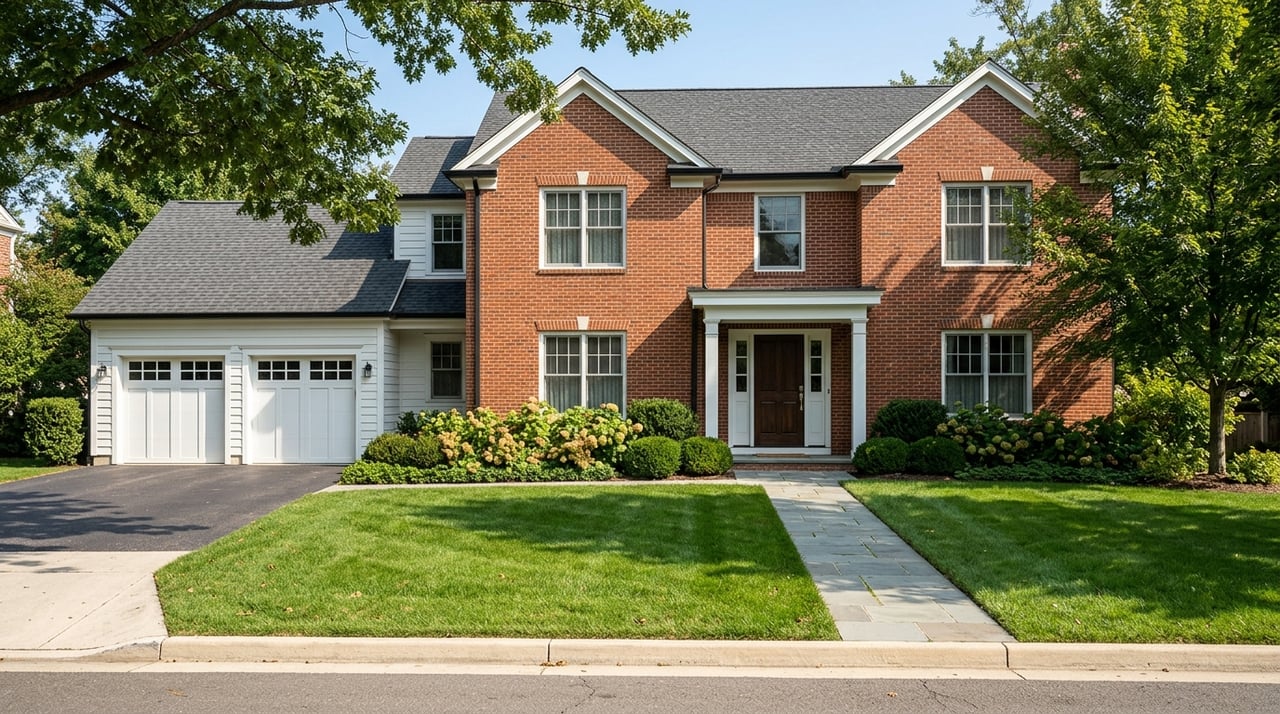
This is where you are likely to see many of Chester’s classic move-up home styles. Colonials, raised ranches, split-levels, and newer detached homes are common fits for buyers who want more interior space and more outdoor room without going fully rural.
Rural Chester Means More Land
For buyers who want privacy, acreage, or a more open setting, Chester’s rural and agricultural edge is worth a close look. These areas are shaped by the AR-.3 district, which is the town’s rural agricultural-residential category.
The combined zoning tables show 3-acre single-family lots in AR-.3, and the code limits flag or rear lots to that district. The town also states that this zoning is meant to help protect agricultural land and scenic open space, which is a big reason the outer areas of Chester feel more rural and spread out.
Recent examples include custom colonials on 4.7, 5.5, and 10.9 acres, along with historic farmhouse-colonials on roads such as Black Meadow Road and Goosepond Mountain Road. In practical terms, this is the part of Chester where land becomes a major feature of the property, not just the backdrop.
If you are comparing home styles, expect to see colonials, farmhouse-colonials, and other detached homes on much deeper lots. These properties can appeal to buyers who want elbow room, a long driveway, or a setting that feels removed from the tighter village pattern.
Common Chester Home Styles
Across Chester, a few home styles show up again and again. Knowing the basics can help you narrow your search faster.
Colonials
Colonials are one of the clearest recurring styles in Chester. You will see them in suburban neighborhoods, on acreage properties, and in some older character areas.
They often appeal to buyers who want a traditional layout and a familiar suburban look. In Chester, colonials can range from newer builds on roughly 1 acre to custom homes on several acres.
Ranches And Raised Ranches
Ranches and raised ranches are part of Chester’s practical housing mix. These homes can show up in both established and suburban areas.
For buyers who want a straightforward layout, they are often worth watching. Their fit and feel can vary a lot based on lot size, updates, and whether the setting is closer to the village or farther out in town.
Split-Levels
Split-levels are another common Chester type, especially in village and suburban contexts. Recent examples in the market include both smaller-lot village homes and larger-lot suburban properties.
That range makes split-levels a good example of how Chester crosses categories. The same general style can feel more compact and neighborhood-oriented in one area, then much more spread out in another.
Capes And Farmhouse-Colonials
Capes tend to fit best with Chester’s older housing stock and established streets. Farmhouse-colonials show up more often where the town leans rural or historic.
These homes can bring more visual character than a standard subdivision house. In Chester, they also help tell the story of how the market shifts from village streets to hamlets to agricultural edges.
Lot Sizes Vary More Than Many Buyers Expect
One of the biggest differences between Chester areas is lot size. This is often the factor that changes how a property feels even more than the house style itself.
A simple way to think about it is this:
- Village and infill homes can sit on roughly quarter-acre parcels
- Suburban homes commonly fall around 0.8 to 2 acres
- Rural properties often run from about 4 to 11 acres or more
That is a wide ladder for one town. If you are moving from a denser suburb or from a more urban setting, Chester can offer a noticeably broader range of land options than you might expect at first glance.
Price Expectations By Area Type
Chester’s pricing also covers a broad range, and it is smarter to think directionally than to rely on one single number. The Town of Chester’s 2020-2024 median value for owner-occupied homes is $435,000, while other market snapshots cited for 10918 and Chester show different figures depending on source and methodology.
Because those figures are not directly comparable, the most useful consumer takeaway is the pattern. Smaller village or infill homes are showing in the low-to-mid $400,000s, while newer colonials and acreage homes often land in the mid-$700,000s to high-$800,000s.
Recent examples support that spread:
- 3 Moffatt Lane at about $465,200
- 11 Oxford Depot at $425,000
- 51 Eagle Crest Way at about $821,800
- 45 Whitetail Run at $825,000
- 487 Black Meadow Road at $725,000
- 56 Goosepond Mountain Road at roughly $535,000 when last sold
For you as a buyer or seller, the key point is simple. Two Chester homes with the same bedroom count can feel very different in value once you factor in lot size, setting, age, and whether the area reads as village, suburban, or rural.
Commute And Access Matter In Chester
Chester is a road-oriented market. The Village of Chester sits on NY-94 north of NY-17, the town posts Route 17M maintenance notices and Route 17 mobility and access project updates, and Census data reports a 42.0-minute mean travel time to work for Chester town workers.
That context matters when you choose where to live. In Chester, buyers should think carefully about driving patterns, daily routes, and how much land maintenance they want tied to that commute.
A village-area home may give you a different day-to-day rhythm than a property several acres out on the rural edge. Neither is automatically better. It comes down to how you want your mornings, evenings, and weekends to feel.
How To Choose The Right Chester Fit
If you are trying to narrow your search, start by deciding which version of Chester fits your lifestyle best. The town offers real variety, and that is a strength if you know how to shop for it.
Ask yourself:
- Do you want a more traditional village setting with smaller lots?
- Do you prefer Sugar Loaf’s historic and mixed-use character?
- Do you want a suburban pocket with a newer home and more yard space?
- Do you want a rural property where acreage is part of the value?
Once you answer those questions, the market gets much easier to read. Instead of treating Chester as one place, you can compare the specific type of Chester that matches your goals.
If you are weighing a move in Chester, working with a local agent who understands the difference between village streets, suburban pockets, and acreage areas can save you time and sharpen your strategy. When you are ready to talk through neighborhoods, pricing, or your next move, connect with James J Cosenza.
FAQs
What home styles are common in Chester, NY?
- Common Chester home styles include colonials, ranches, split-levels, raised ranches, Capes, and farmhouse-colonials.
What parts of Chester, NY feel most village-like?
- The Village of Chester and nearby infill areas, including streets around places like Moffatt and Oakland, tend to feel the most village-like with smaller lots and older detached homes.
What is Sugar Loaf in Chester, NY known for?
- Sugar Loaf is known as Chester’s historic, arts-oriented hamlet, with older character-driven buildings, converted residences, and mixed-use patterns in its business district.
How large are lots in Chester, NY?
- Lot sizes in Chester can range from about a quarter acre in village and infill areas to roughly 0.8 to 2 acres in suburban pockets and about 4 to 11 acres or more in rural sections.
How much do homes cost in Chester, NY?
- Chester home prices vary by area type, lot size, and home style, but recent examples show smaller village and infill homes in the low-to-mid $400,000s and newer colonials or acreage homes in the mid-$700,000s to high-$800,000s.
Is Chester, NY a commuter-friendly town?
- Chester is a road-oriented town with regional access via routes such as NY-94 and NY-17, and the Census reports a 42.0-minute mean travel time to work for Chester town workers.