Are you looking for steady rental income close to New York City without buying a large apartment building? Small multifamily properties in Rockland County can deliver that blend of cash flow and convenience. You want clear numbers, low surprises, and a simple plan to evaluate each deal. In this guide, you’ll see local prices and rents, where to look, how to underwrite quickly, and the local rules that can impact returns. Let’s dive in.
Rockland market snapshot
Typical home values in Rockland County sit around the mid 700s, which gives you a quick sense of pricing pressure and replacement costs across the market. You can track this on the county page for home values on Zillow, where the current typical value is about $726,000 and updates frequently. See the latest on the Rockland County home values page.
Asking rents for standard apartments commonly fall in the $2,500 to $3,200 range depending on size and location, with county averages reported in the upper $2,000s. You can spot-check current asks on the RentCafe Rockland County page. For a conservative benchmark when underwriting, compare those asks to HUD Fair Market Rents by ZIP. Try a quick lookup for Orangetown ZIPs on the HUD FMR tool.
Local planning materials point to a tight housing supply and limited developable land, which supports durable rental demand for well-priced units. You can review contextual details in the county’s housing needs work cited in the Rockland planning assessment materials. Rockland’s commuter access also helps stabilize demand, with rail and bus nodes serving Nanuet, Pearl River, Spring Valley, and Suffern.
Why small multifamily here
- You can spread risk across 2 to 4 units while keeping residential financing options.
- Rents are strong relative to typical monthly ownership costs for well-bought assets.
- Owner-occupants may access more favorable loan terms than investors purchasing the same property type. Industry reporting highlights recent guideline changes that improved options for qualifying owner-occupied 2 to 4 unit purchases. Verify current details with your lender and see an overview in this financing explainer.
Neighborhoods to explore
- Ramapo, Spring Valley, Monsey. A large rental base and convenient commuter links. You’ll find a range of small multifamily stock and frequent tenant demand.
- Clarkstown, Nanuet, Nyack. Mix of higher-value neighborhoods and strong retail corridors. Station access can support rent premiums for renovated units.
- Orangetown, Pearl River, Tappan. Stable residential areas with pockets of duplexes and triplexes near transit and village centers.
- Haverstraw and the waterfront. Older multifamily stock is common. Check flood maps and insurance feasibility before you underwrite waterfront or creek-adjacent properties. The Rockland County Hazard Mitigation Plan provides floodplain context.
Common property types
In Rockland, small multifamily usually means:
- Duplexes, often side-by-side or up/down layouts
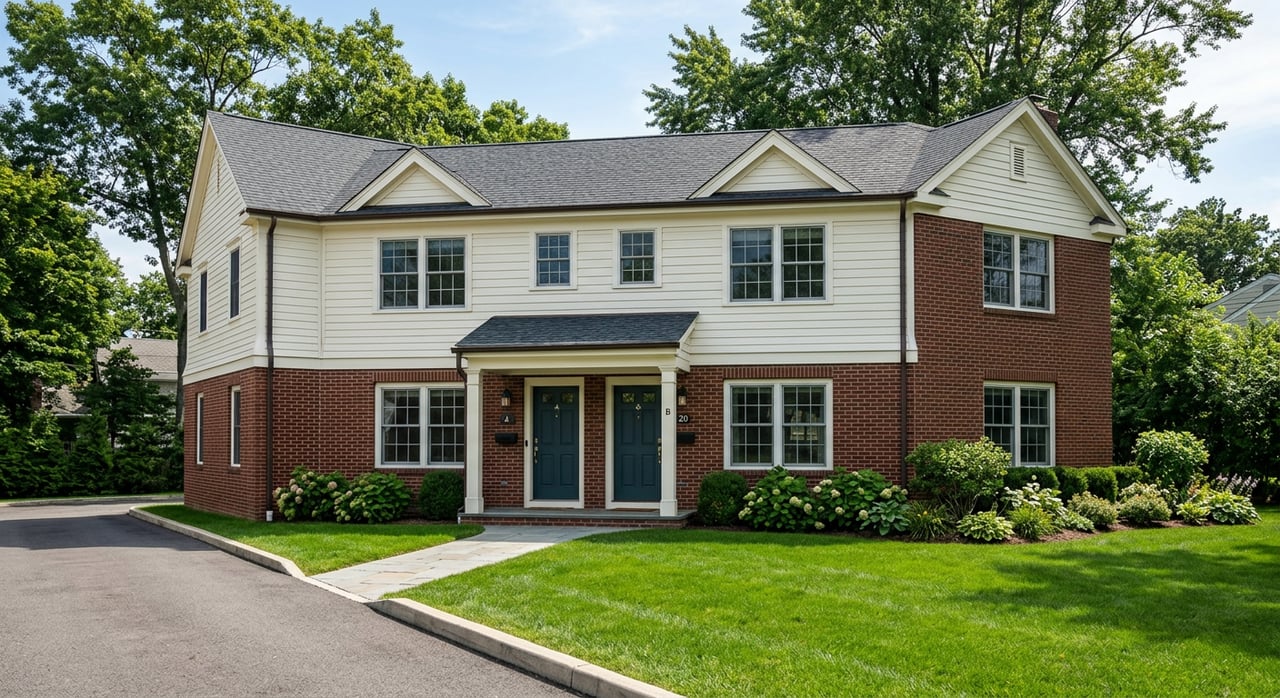
- Triplexes and fourplexes in 2 to 3 story walk-ups
- Older homes converted to legal multi-unit setups
Many of these buildings predate 1980, so budget for systems updates and lead-safe compliance where applicable. Local MLS coverage through HGAR/OneKey will show property age, structure type, and unit mix for comps and targets.
Underwrite in 5 steps
Here is a simple, repeatable workflow you can use for any 2 to 4 unit deal.
1) Build your rent and sale comp set
- Pull 3 to 5 recent sales of 2 to 4 unit properties within about a mile. Note condition, bed/bath mix, and parking.
- Compile current asking rents for comparable 1, 2, and 3 bedroom units. The RentCafe Rockland County page is a fast way to scan asking rents by town and bedroom count.
- Cross-check conservative rent potential with HUD’s FMR lookup.
2) Calculate income
- Gross Scheduled Income (GSI) = sum of current or market monthly rents times 12.
- Vacancy allowance. With Rockland’s constrained supply, a 5 to 8 percent vacancy assumption is a common conservative range for small, well-located properties. Use local rental activity and the county housing needs materials as context.
- Effective Gross Income (EGI) = GSI minus vacancy plus any other income like parking or laundry.
3) Estimate operating expenses
- Include taxes, insurance, utilities paid by owner, repairs and maintenance, management, and reserves.
- Many small-multifamily investors underwrite management at 8 to 10 percent of collected rents, and maintenance/reserves at 5 to 10 percent, then replace those with vendor quotes as they firm up the deal. See a quick overview of common expense inputs in this investing calculator guide.
- Pull the actual tax bill and assessment history for your target property on PropertyShark’s Rockland County tax page. Taxes are a major driver of NOI here.
4) Compute returns
- Net Operating Income (NOI) = EGI minus operating expenses.
- Cap rate = NOI divided by purchase price. Use this to compare unlevered returns for the assets on your shortlist.
- GRM = purchase price divided by annual gross rent. It is a quick screen that helps you rank deals before deeper analysis.
- If you plan to use financing, add annual debt service and compute DSCR = NOI divided by annual debt service. Many lenders look for DSCR above about 1.20 to 1.25 on investment loans.
5) Sanity-check and stress test
- Compare your modeled rent to both current asks and FMRs.
- Bump taxes, insurance, and vacancy by a few percent to see if your DSCR or cap rate still holds.
- Confirm unit legality, zoning, and any rent regulation status before you rely on your numbers.
Back-of-the-envelope worksheet
Use this quick template to size up a deal in minutes. Replace the example figures with current comps and real quotes.
| Input or Metric | Example Figure | Source or Note |
|---|---|---|
| Units and mix | 3 units: 2x 2BR, 1x 3BR | MLS comps |
| Market rent 2BR | $2,700 each | RentCafe asks, HUD FMR check |
| Market rent 3BR | $3,200 | RentCafe asks, HUD FMR check |
| GSI | $2,700 + $2,700 + $3,200 = $8,600/mo → $103,200/yr | Formula |
| Vacancy (6%) | $6,192 | Housing needs context |
| Other income | $0 | Add parking/laundry if any |
| EGI | $97,008 | GSI minus vacancy |
| Taxes | $12,000 | Pull actual bill on PropertyShark |
| Insurance | $3,800 | Local quote |
| Owner-paid utilities | $2,400 | Estimate or utility history |
| Management (8%) | $7,761 | Of EGI |
| Maintenance/reserves (7%) | $6,790 | Of EGI |
| Total expenses | $32,751 | Sum above |
| NOI | $64,257 | EGI minus expenses |
| Purchase price | $800,000 | Based on comps |
| Cap rate | 8.0% | NOI divided by price |
| GRM | 7.75 | Price divided by GSI |
These are sample numbers only. Always replace them with current comps, tax bills, and vendor quotes for your specific address.
Local rules to verify
Small multifamily investing works best when you confirm the rules early. Build these checks into your due diligence.
- Unit legality and Certificate of Occupancy. Verify the legal unit count with the local building department. Illegal conversions affect value, insurability, and financing. The county’s planning materials reinforce that municipal approvals are the gating item for any conversions. See context in the Rockland planning assessment.
- Rent regulation. Portions of Rockland include rent-stabilized housing that follows local Rent Guidelines Board decisions. Recent updates set renewal increases for regulated units in certain areas. Review the recent board action reported by Rockland County Business Journal, and confirm any property’s status with NYS Homes and Community Renewal rent regulation guidance. Many 2 to 4 unit properties are market-rate, but you must verify.
- Property taxes and assessments. Rockland’s tax burden is meaningful. Pull the current bill and recent assessment on PropertyShark, and model future increases.
- Flood and environmental exposure. Check FEMA flood maps and the Rockland County Hazard Mitigation Plan for waterfront and creek corridors. If a lender requires flood insurance, get a quote before you finalize returns.
- Lead-safe rules for pre-1978 buildings. Federal lead paint disclosure applies, and certain renovations require EPA-certified RRP contractors. Review the EPA’s lead-safe renovation FAQ.
- Insurance and utilities. Confirm which utilities are tenant-paid. Owner-paid heat or electric can reduce NOI.
- Lease audit. Review executed leases, rent rolls, security deposits, and any open code violations.
Key cost factors
- Property taxes. Rockland ranks among higher-tax New York counties, and four-figure to low five-figure annual tax bills are common on small multifamily assets. Double-check the actual bill on PropertyShark. A several-thousand-dollar variance can change your DSCR.
- Insurance. Older stock and flood zones can raise premiums. Get quotes early.
- Owner-paid utilities. If heat, hot water, or electric remain on house meters, adjust your expense load or consider submetering where feasible under local rules.
- Turnover and repairs. Budget for unit turns, common area upkeep, and system updates.
Financing options
- Owner-occupied 2 to 4 units. Residential financing typically applies, and recent guideline shifts reported in industry outlets have improved access for some buyers. Some conventional products allow higher loan-to-value on qualifying owner-occupied small multifamily. Always confirm current LTVs, reserve requirements, and whether projected rents can be used to qualify. For context, see this overview of recent conventional updates.
- Investor loans. Expect higher down payments and DSCR-based or portfolio underwriting. Shop multiple lenders and local credit unions to compare overlays and reserve requirements.
Pro tips for your first deal
- Verify, then underwrite. Do not rely on an estimate for taxes or unit legality. Pull the bill, call the building department, and request the rent roll with proof of payment.
- Use FMRs as a floor. If your model only works at the very top of asking rents, tighten your assumptions.
- Mind regulation pockets. In places like Spring Valley or Haverstraw, some small buildings can be in regulated portfolios. Confirm status with HCR and local municipal offices.
- Lean on transit nodes. Proximity to train stations and strong bus service can support rent and lower vacancy. Use station access as a comp filter when possible.
Ready to get started?
If you are serious about a duplex to fourplex in Rockland, partner with a CIREC-designated agent who knows both residential 1 to 4 unit lending and local municipal processes. I can help you source deals, pull clean comps, confirm taxes and unit legality, and build a simple model you can use on every property you tour. Let’s find a property that cash flows on day one and supports your long-term goals. Connect with James J Cosenza to start your search.
FAQs
What are typical Rockland County rents for 2 to 3 bedrooms?
- Asking rents often range from about $2,500 to $3,200 depending on town, size, and condition. Check current asks on the RentCafe Rockland County page and compare to HUD’s FMR lookup for a conservative benchmark.
How do I estimate vacancy when underwriting a duplex?
- Use a 5 to 8 percent vacancy allowance for well-located small multifamily, then adjust to local listing activity and seasonality. The county’s housing needs context supports tight rental supply in many areas.
Which costs most affect cash flow in Rockland?
- Property taxes, insurance, and any owner-paid utilities tend to move NOI the most. Always verify the current tax bill on PropertyShark.
Are small multifamily buildings in Rockland rent regulated?
- Many 2 to 4 unit properties are market-rate, but regulation pockets exist. Review NYS HCR’s rent regulation guidance and check local Rent Guidelines Board updates, like those reported by Rockland County Business Journal.
What flood risks should I check before buying near the Hudson?
- Confirm FEMA flood zone status and review the Rockland County Hazard Mitigation Plan. If flood insurance is required, get a quote and factor it into NOI before offering.
What is the difference between cap rate and GRM?
- Cap rate is NOI divided by price and reflects an unlevered return after expenses. GRM is price divided by annual gross rent and is a fast screening tool that ignores expenses.
Can I use residential financing for a 4-unit if I live in one unit?
- Often yes. Owner-occupied 1 to 4 units are typically treated as residential. Recent industry reporting notes guideline changes that improved options for some buyers, but you should confirm current rules with your lender. See a high-level overview in this financing explainer.
What should I include in a lease audit before closing?
- Collect all executed leases, rent rolls, security deposit records, payment history, and any notices or open code violations. Verify terms like expiration dates and utilities responsibility.
Do I need to worry about lead paint in older Rockland properties?
- For pre-1978 buildings, federal lead paint disclosure applies and certain renovations require EPA-certified RRP contractors. Review the EPA’s lead-safe renovation FAQ.